
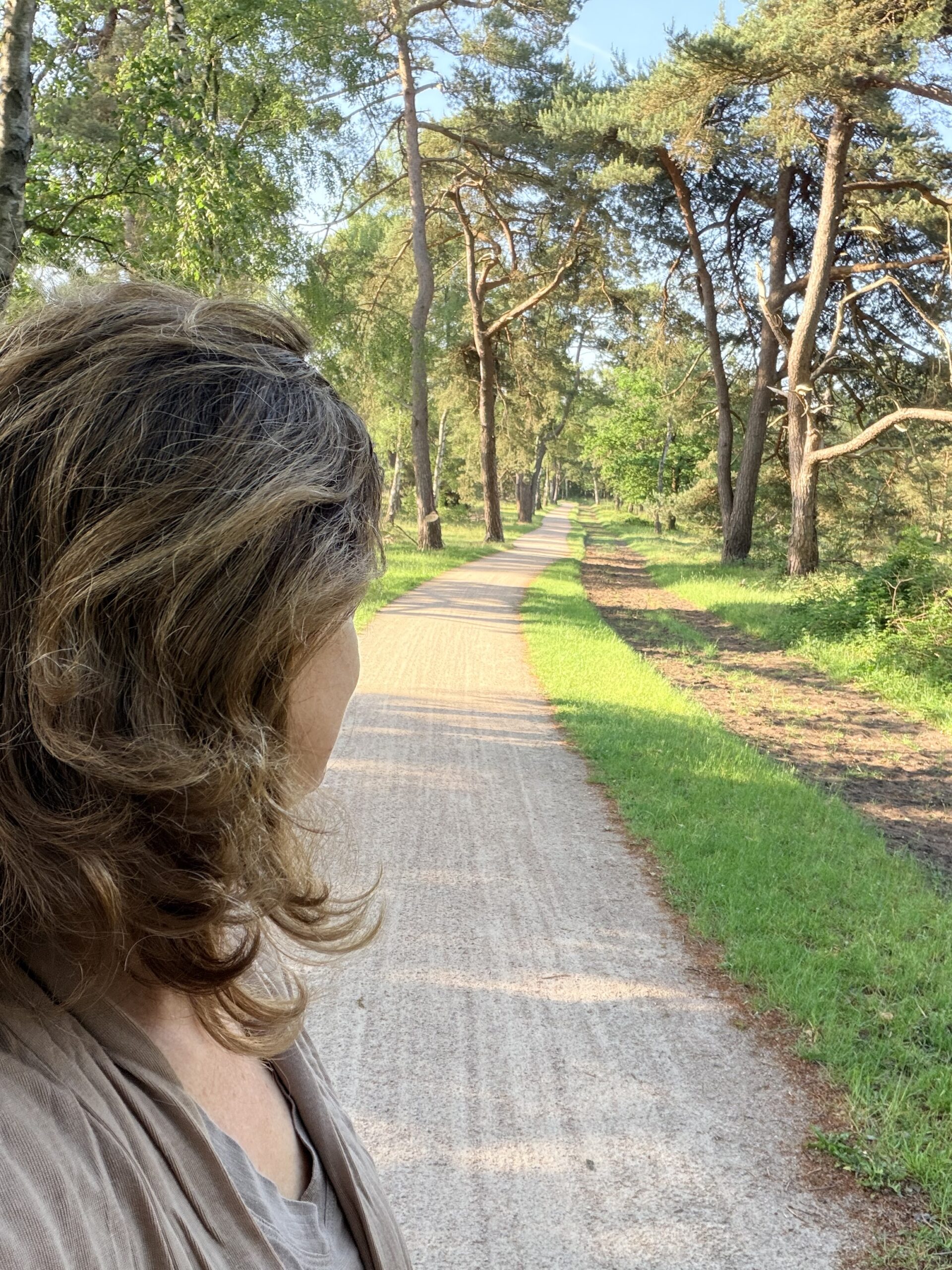
This time of year, just after the summer holidays, is a good moment for reflection. What’s going well in my life? What would I like to give more attention to in the coming period, and what less?
Last week I spoke with a good friend who always asks the follow-up questions to find out how I’m really doing. As I started talking, I realized, mid-conversation, that I’m actually uncertain about quite a few things: where I want to live in five years, where I want to place the emphasis in my work, what my ideal relationship looks like. And I noticed I had a judgment about that uncertainty. Until my friend spoke the wise words: “You’re allowed to doubt. Doubt is good.” A wave of relief came over me, and I felt the judgment shift into curiosity and a kind of playfulness.
This shows, once again, how hard it is to move through life transitions consciously. Over the past year I have immersed myself in the study of life transitions, lived through my own share of life experience and the change that comes with it and I know rationally how important it is to “stand still”. To stay in that unknown, liminal in-between phase that offers such unique opportunities for personal growth.
And yet the inner saboteurs keep surfacing:
“You’re 52 now, surely you should know what you want by this point.”
“Come on, just get on with it, take action, and the rest will follow.”
“You used to be so decisive, is this some kind of midlife (menopause) thing?”
And of course (Enneagram type 3): “Doubt equals failure.”
So the question becomes: what kind of doubt is this, really?
Is it the restless doubt: the kind that wants to escape discomfort, that generates internal noise and stagnation, and grabs the fastest, most obvious way out?
Or is it the quiet doubt: the kind that feels into what my inner compass is saying, keeps listening curiously to what arises, and eventually leads to clarity?
And how do I tell the two apart? Not by how long it lasts, I’ve noticed, but by a few other signals.
Quiet doubt stays in motion, even without an answer yet: you notice new things, experience different reactions from the world around you, and now and then a spark of clarity appears, even if it does not resolve everything right away.
Restless doubt, however, keeps asking the same question in the same way and keeps getting the same unhelpful answer back; this is when doubt shifts from exploring into ruminating.
Quiet doubt can be tiring, but it usually leaves you with something: a new insight, a question that has sharpened.
Restless doubt mostly feels empty and depleting, without anything shifting. When I bring my attention to my body, I often feel that restlessness in my stomach, chest or throat.
And where quiet doubt starts from curiosity and opens me up to what life offers: a spontaneous conversation, a chance encounter, a book that crosses my path, restless doubt is mostly turned inward and judgmental, with no room for new perspectives.
So the question is not “how long am I allowed to doubt,” but: “is it still moving, is it still feeding me, and am I still looking outward?” Once the answer to all three is no, it is time to change something. Not necessarily by forcing a decision, but by giving the doubt itself a different shape: talking about it, writing it down, trying a small experiment (e.g. making a temporary change).
What I want to keep reminding myself:
- You’re allowed to doubt. Doubt is actually a good thing. And keep checking which kind of doubt it is.
- Doubt is necessary. You’re on your way to a more authentic life, to listening to your feelings and staying open to what comes on your path.
- And yes, sometimes it’s tiring and hard (“ouch, I’m growing”).
Is your doubt still moving…or has it turned into rumination?


View comments
+ Leave a comment